Odor is the silent dealbreaker of cat ownership. You can love your cat completely and still wince when a guest walks past the litter corner. The smell is not merely unpleasant; it signals that waste is lingering, which is exactly the condition cats try to avoid. A self cleaning litter box attacks this problem at its source by removing waste shortly after it appears, before odor has time to settle into the surrounding room.
Many owners treat smell as an unavoidable cost of having a cat. In reality, most litter odor comes from waste sitting exposed for hours, not from the cat itself. When the box is cleaned consistently, the air stays noticeably fresher, the litter lasts longer, and your cat is far more willing to use the box. The difference between a house that smells faintly of ammonia and one that smells neutral usually comes down to timing rather than scrubbing harder.
This article explains where the smell actually comes from, how automated cleaning interrupts it, what to check so the machine you choose keeps working quietly, and how to handle the stubborn cases that survive better equipment. By the end, you should have a realistic plan for a fresher home, one grounded in how odor forms rather than in masking it.
Where Litter Box Odor Really Comes From
Understanding the source makes the solution obvious. Ammonia builds as urine breaks down, and it is the sharp note most people associate with a dirty box. Solid waste adds its own pungent compounds, and both intensify quickly in warm, enclosed spaces such as closets or small bathrooms. The longer waste stays exposed, the more the litter itself absorbs the smell, so a box that looks clean can still carry stale odor that lingers even after you scoop.
Moisture amplifies everything. Damp litter holds odor and provides an ideal environment for the bacteria that produce it. That is why a box in a humid bathroom tends to smell worse than one in a drier spot, and why litter that is not refreshed regularly becomes a reservoir of smell rather than a defense against it. Simply adding deodorizer treats the symptom while the source keeps producing new odor every few hours.
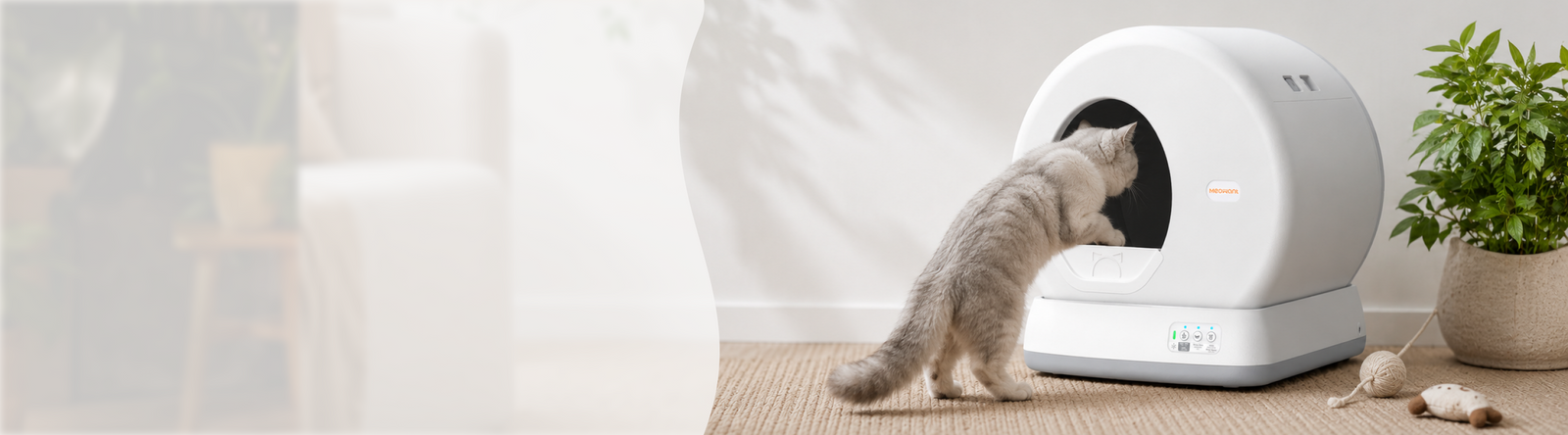
The practical takeaway is that speed matters more than scrubbing. A box that is cleaned right after each use never gives bacteria a foothold. This is where a self cleaning litter box earns its place. By cycling shortly after your cat leaves, it isolates waste into a sealed compartment before it can perfume the room. The result is not a stronger cover-up scent; it is the absence of the problem to begin with.
How Automation Interrupts the Odor Cycle
Automated cleaning works by shortening the window in which waste is exposed. The mechanism sifts clumps and solids into a contained bin, and a tight seal keeps those odors from escaping back into the room. That single change in timing is what separates a box that smells like a manageable pet supply from one that dominates an entire floor of the house.
Sealed Storage Does the Heavy Lifting
The single most effective odor feature is a well-sealed waste drawer. Carbon filters neutralize what little escapes, and a snug lid means the bin can sit for a few days without announcing itself. When you compare models, look at how the drawer closes and whether the bag liner seals around the rim; these small details separate a genuinely odor-tight design from one that leaks. A drawer that slides out cleanly also matters, because a bin you dread emptying will linger longer than it should.
The Role of Airflow and Placement
Even a sealed box benefits from smart placement. Give it a spot with some air movement rather than a closed cupboard, and avoid cramming it against a wall that traps warm air. Combined with automatic cleaning, thoughtful placement keeps the surrounding area dry and neutral. Meowant pairs sealed waste storage with a design meant to fit unobtrusively into real homes, so the machine works quietly in the background instead of becoming another thing to manage.
Choosing a Model That Stays Fresh Long Term
Freshness is a maintenance outcome, not just a purchase decision. Prioritize a machine with a generous waste capacity so you are not emptying it constantly; a bin that holds several days of waste keeps the routine low-effort. Check that the litter bed stays level after each cycle, because uneven litter lets waste cling to exposed surfaces. Confirm that the interior components lift out easily, since occasional deep cleaning is what keeps a good box from becoming a forgotten one.
Also weigh litter compatibility. Some automated boxes favor clumping clay, while others handle alternative substrates. Using a litter the machine was designed for keeps the sifting mechanism effective and prevents the smearing that produces extra odor. A short trial period will tell you whether the cycle time and noise suit your cat. Meowant’s boxes are built to work with mainstream clumping litter and to tolerate the daily rhythm of a real household.
Sensor hygiene is easy to overlook. Dust and debris on weight sensors can cause false triggers or skipped cycles, and a machine that stops cleaning is a machine that starts smelling. Wipe the sensors during your regular drawer changes so the mechanism keeps seeing what it expects to see. A two-minute habit prevents most of the odor problems that frustrate new owners.
Think about the bag, too. A thin liner can tear as the drawer fills, leaking waste into seams that are hard to reach. Sturdy liners sized to the drawer prevent that mess and make emptying a clean, quick task. Keep a spare roll nearby so a full bag never becomes a reason to postpone the swap.
Litter depth interacts with odor in ways many owners miss. Too little litter leaves urine pooling at the bottom, where it clings and smells; too much wastes product and makes sifting harder. Aim for the depth the manufacturer recommends, and top up after each drawer change rather than waiting for the bed to look visibly low.
Handling the Smells Automation Cannot Reach
Even the best machine will not fix every source of odor. Cat urine that has soaked into flooring, baseboards, or a fabric mat requires separate treatment, because the problem now lives outside the box. Clean hard surfaces with an enzymatic cleaner that breaks down the compounds, and replace or deep-clean mats that hold residual smell. If accidents keep happening outside the box, address the cause, which is often stress, illness, or too few boxes, rather than simply the equipment.
Diet plays a quieter role as well. Some cats produce stronger waste, and a change in food can shift the intensity of odor even with perfect cleaning. If freshness remains a struggle despite automation, mention it to your vet, since persistent strong odor can sometimes hint at an underlying health issue. Treating the box is the first step; understanding the cat is the rest of the solution.
Household airflow is another lever worth pulling. A room sealed tight traps odor, while a gentle fan or an open doorway lets stale air move on. None of these steps replaces automated cleaning, but together they close the gaps that a machine alone cannot cover. Freshness is rarely the result of one fix; it is the outcome of several small ones working in the same direction.
A Fresher Home Is a Few Cycles Away
Litter odor is not an unavoidable tax on cat ownership; it is the predictable result of waste sitting too long. A self cleaning litter box solves the root cause by removing waste quickly and sealing it away, so the room stays fresh without daily intervention. Choose a model with a tight waste drawer, sensible capacity, and easy-to-clean parts, then give your cat a calm introduction and keep the sensors tidy. The payoff is immediate and lasting: a home that smells clean, litter that goes further, and a cat that keeps using the box with confidence.