There’s a difference between a gaming portal that lists many games and one that functions as a coherent entertainment ecosystem. The first is a catalog. The second is something players return to because the parts work together — because playing card games, collecting daily rewards, switching to a live dealer table, and withdrawing winnings all feel like they belong to the same experience rather than isolated features sitting in the same interface.
Hitclub has built the second kind of product. It operates as a reward gaming portal where the game library, the reward structure, the mobile infrastructure, and the financial systems are designed to support each other — not just coexist.
Gaming portals like GO88 have demonstrated what this kind of integrated product looks like at scale. Hitclub has developed its own version of that ecosystem, shaped around a player base that values consistency and variety in equal measure. To understand what’s actually inside the portal, visit Hitclub directly — but this article walks through the structure first.
The Core of the Hitclub Ecosystem
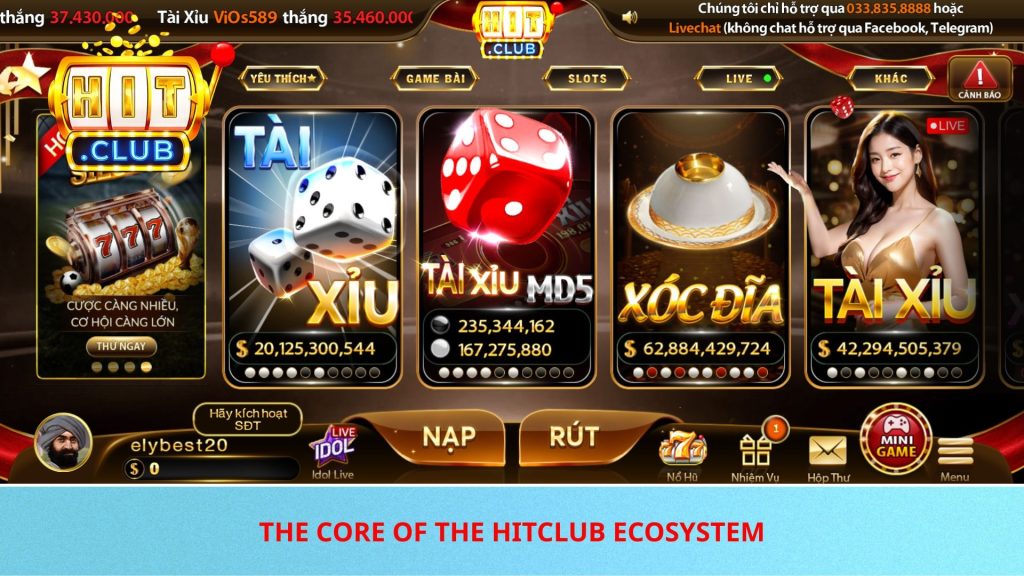
The Hitclub game portal is organized around 4 game categories, each serving a distinct player habit:
- Card games — Tiến Lên, Phỏm, Mậu Binh, Poker, with functioning lobby infrastructure and real chip mechanics
- Jackpot slots — progressive and fixed-prize formats across a range of themes
- Live dealer tables — real-time streamed sessions with human dealers across classic table formats
- Arcade and mini games — short-format titles including fish shooting games and crash-style formats
These categories don’t operate in isolation. A player might start a session in the card lobby, shift to a live dealer table during a break in matchmaking, and finish with a quick arcade game before logging out. The ecosystem is designed to support that kind of fluid movement between formats.
The Game Layer — Variety That Serves Real Habits
Card Games as the Social Core
Card games occupy a specific position in the Hitclub ecosystem — they’re the category that generates the most sustained player engagement and the most active community conversation. Titles like Tiến Lên and Phỏm are social by nature: players discuss strategy, hands, opponents, and table dynamics in ways that other game formats don’t invite.
The card section at Hitclub is built with this social dimension in mind. Lobbies populate quickly during peak hours, matchmaking keeps sessions competitive, and the chip system is transparent enough that both experienced and newer players can engage meaningfully. This creates a self-reinforcing cycle: active card lobbies attract more players, which keeps the lobbies active.
Slots and Live Dealer — Balancing Pace and Atmosphere
Jackpot slots and live dealer tables serve adjacent but distinct player needs within the ecosystem. Slots are for players who want variable outcomes within a short time window — each spin is self-contained, and progressive jackpot mechanics add a long-session layer for those who stay. Live dealer tables slow that pace considerably, replacing it with the social rhythm of a real-time session where bet windows open and close, results unfold with a human dealer managing the table, and the atmosphere is closer to a physical venue than any automated format can achieve.
Having both within the same gaming portal means Hitclub can serve a player whose mood shifts between sessions — or within a single one. That flexibility is part of what makes it function as an ecosystem rather than a single-format site.
Arcade Games — The Entry Point That Keeps Players In
The arcade section serves a function that’s easy to underestimate. Short-format games with simple mechanics and quick outcomes act as both an entry point for new players and a low-commitment option for regulars between longer sessions. Fish shooting games, crash-style formats, and other mini titles in this category require no prior knowledge of card game strategy or live dealer etiquette — they’re accessible immediately.
This matters for the ecosystem because it reduces the activation energy required to open the app on a casual basis. Players who aren’t ready for a full card session or a live dealer table still have a reason to engage — and that keeps the portal present in daily habits rather than reserved for dedicated gaming sessions.
(Reference: https://hitclub.cab/ — full arcade and mini game category listings)
The Reward Layer — What Keeps the Ecosystem Active
Daily Incentives as Engagement Architecture
No ecosystem sustains itself on games alone. The reward structure at Hitclub functions as the engagement architecture that sits beneath the game layer — creating reasons to return even on days when a player doesn’t intend a long session.
Daily check-in bonuses reward consistent presence without requiring significant time investment. Event-based promotions tied to specific game categories give players with established preferences a reason to engage more deeply during promotion windows. Referral incentives extend the ecosystem outward, turning satisfied players into an organic acquisition channel.
The terms on these promotions are stated clearly — a detail that matters because ambiguous reward conditions undermine the trust that the reward layer is supposed to build. Hitclub’s approach to promotion transparency supports rather than undermines player confidence in the system.
Progression Across Sessions
One of the subtler ecosystem qualities at Hitclub is the sense that time spent in the portal accumulates toward something. Tiered loyalty structures, accumulated bonus claims, and referral rewards that grow with the network of players a user has introduced all create a form of progression that extends beyond individual game sessions. This is how ecosystems retain players over months rather than days.
The Infrastructure Layer — What Makes It Work
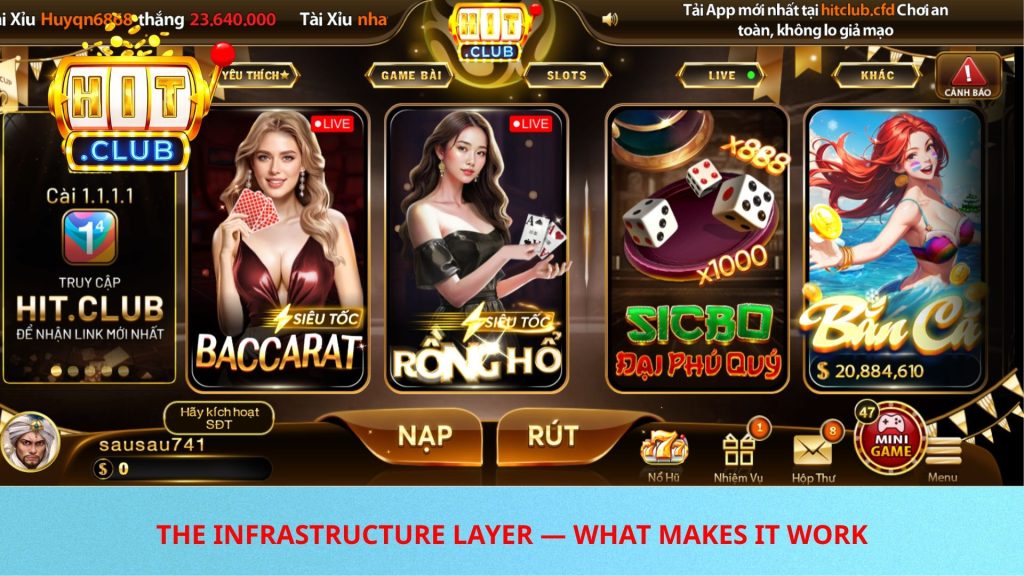
An ecosystem is only as strong as the infrastructure holding it together. For Hitclub, that infrastructure has 3 components:
Mobile Performance
The app runs consistently on mid-range Android and iOS devices — the devices most Vietnamese players actually use. Transitions between game categories are smooth, loading times are short, and sessions don’t drop during extended use. This reliability is the foundation everything else sits on.
Financial Processing
Deposits process quickly across bank transfer and e-wallet methods. Withdrawals operate within communicated timeframes with no documented patterns of arbitrary delays. The financial layer of the ecosystem behaves predictably — which is the baseline requirement for player trust in any reward gaming portal.
Support Access
Live chat support covers account, transaction, and technical queries during active hours. It’s not a complex system, but it addresses the most common reasons players need to reach out — and it does so without creating additional friction in an already time-sensitive situation.
Conclusion
What defines the entertainment ecosystem of Hitclub is the relationship between its parts rather than any single feature in isolation. The game library serves multiple player types. The reward structure creates reasons to return beyond individual sessions. The mobile infrastructure makes access frictionless. The financial system operates transparently. Together, these elements form a reward gaming portal that functions as a coherent product — one where playing, earning, and engaging all feel like they belong to the same experience. That coherence is what separates an ecosystem from a catalog, and it’s what gives Hitclub its staying power in a competitive market.