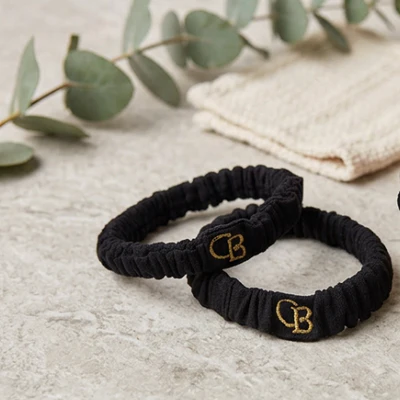
Small habits leave marks. The hair ties you reach for every morning are one of them. Most women go through dozens of hair ties a year without thinking much about what those ties are actually doing. But if you have noticed more breakage lately, or a thinning patch near your temples, or hair that just feels rougher than it used to, your hair ties might be worth a closer look. The material you wrap around your hair every day adds up.
Switching away from plastic hair ties does something most people do not expect. The changes are not dramatic overnight. They are quieter than that, and they show up in ways you might not immediately connect back to something as ordinary as a hair tie.
The First Thing You Notice Is Less Breakage
Plastic elastic grips your hair unevenly. It pulls tighter in some spots than others, and when you take it out, it sometimes takes strands with it. That is not bad luck. That is the material doing what it does.
Natural fiber ties hold your hair differently. The texture distributes pressure more evenly across the section. Less concentrated tension means the hair shaft takes less repeated stress. Trichologists, who study hair and scalp health, have noted that traction damage from tight accessories is one of the more overlooked causes of hairline thinning. The American Academy of Dermatology lists repeated tension from hair accessories as a contributing factor in traction alopecia.
You probably will not notice the absence of breakage right away. You notice it a few weeks in, when there are fewer short snapped strands around your hairline.
Your Hair Stops Creasing Mid-Day
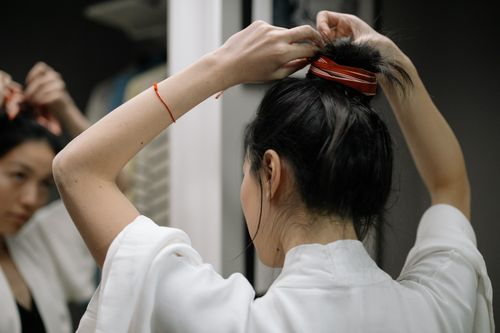
If you wear your hair up for work or during a workout, you know the dent. You take your hair down, and there is a visible crease where the tie sat. With some hair types, it fades quickly. With others, it stays for hours.
That crease comes from the tie pressing too hard against your hair for too long. Smooth synthetic elastic does not give much. It holds a fixed shape and presses your hair into that shape with it.
A pineapple fiber blend tie has a different surface texture. It grips without pressing in the same rigid way. Women with thick hair tend to notice this most. The hold stays firm, but the hair comes down looking closer to how it went up.
What Happens At The Hairline
The hairline is where traction damage shows up first. It is also the area most people ignore until the thinning becomes obvious. Plastic ties pulled tight near the temples create repeated stress on the follicles in that area. Over months, that stress can weaken the hair at the root.
Let’s break it down simply. Follicle damage from traction does not always reverse fully once it starts. Catching it early, or avoiding it altogether, is worth more than treating it later. Switching to a gentler material earlier rather than later is perhaps the most practical thing you can do for your hairline.
The Microplastic Side Of The Story
Here is something most people have not thought about. Every time a synthetic hair tie flexes, it can release tiny plastic particles. Research published by the journal Environmental Science and Technology found microplastic fibers from synthetic textiles throughout water systems globally. Your hair tie is one small source, but it is a source you wear on your body every day.
A plastic-free hair tie removes that exposure entirely. No synthetic elastic means no microplastic shedding against your skin or into your environment. The swap is small. The accumulated difference is not.
Why The Material In The Core Matters
Most people focus on the outer fabric of a hair tie. The core matters just as much, maybe more. The core is what provides the stretch. If the core is synthetic elastic, the tie is not truly plastic-free regardless of what the outside looks like.

The Hair Halo™ by Ciao Bella Collective uses a core of natural rubber and cotton elastic. The outer fabric is a pineapple fiber blend. No synthetic materials anywhere in the product. Each pack of six saves around 30g of plastic compared to standard ties. Ciao Bella backs each tie with a 90-day replacement if it snaps, and donates 5% of proceeds to the Surfrider Foundation.
How Long Before You See A Difference
Most women notice reduced snagging and fewer creases within the first week or two. Breakage reduction takes longer to see because hair grows slowly, and damage shows up with a delay.
A rough estimate: give it a month of consistent use before you assess. By then, you will likely notice fewer snapped strands when you brush, less roughness at the hairline, and a cleaner release when you take your hair down.
The tie you wear every day is doing something to your hair. Switching to one that works with your strands instead of against them is a small decision with a longer return than most hair care products you spend money on.
Shop the Hair Halo at ciaobellacollective.com.